
TMS Vendor Consolidation Crisis 2026: How European Shippers Can Navigate Post-Merger Procurement Risks and Leverage DCSA Standards for Future-Proof Carrier Connectivity
The European TMS procurement landscape just shifted dramatically. WiseTech Global's $2.1 billion acquisition of E2open and Descartes Systems Group's $115 million purchase of 3GTMS represent the largest vendor consolidation wave in over a decade. For procurement teams planning 2026 budgets, the vendors you're evaluating today may not exist as independent entities by implementation time.
These aren't isolated deals. This marks Descartes' 32nd acquisition since 2016, while WiseTech has built an empire through systematic platform consolidation. European IT directors now face a procurement crisis: how do you select stable vendors when market consolidation accelerates monthly?
The Great TMS Vendor Consolidation Wave Reshaping European Procurement
WiseTech's acquisition is expected to be completed in 1H26, creating a supply chain software giant spanning logistics execution and global trade management. Meanwhile, Descartes acquired 3GTMS for $115 million primarily to capture their extensive carrier API integrations and North American network reach.
The scale matters. E2open provides cloud platform services to more than 6,000 companies including Dell Technologies Inc. and Cisco Systems Inc., tracking more than 18 billion transactions annually. These aren't small players disappearing—they're established platforms with deep customer relationships.
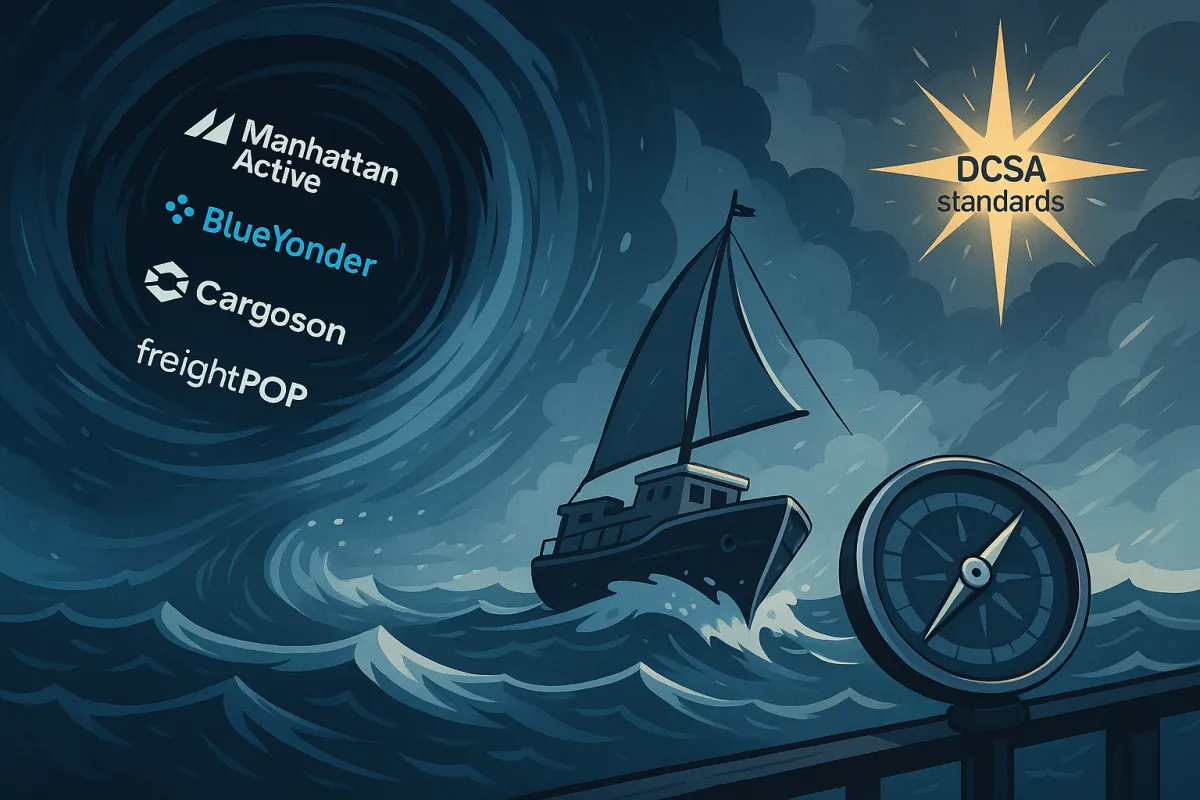
European procurement teams planning their TMS selections for 2026 face an unprecedented challenge: the landscape they're evaluating no longer exists. Independent vendors like Manhattan Active, Blue Yonder, Cargoson, and FreightPOP must now compete against consolidated platforms with expanded capabilities and financial backing.
Hidden Risks: Why 68% of Post-Acquisition TMS Implementations Fail Within 18 Months
The integration track record tells a sobering story. 66% of technology projects end in partial or total failure, with 17% of large IT projects threatening company existence. When your TMS vendor becomes an acquisition target, you inherit these integration risks without directly managing the project.
Real costs compound quickly. A mid-sized European retailer using E2open's transport planning module faces potential re-implementation costs exceeding €2.3 million when WiseTech consolidates platforms. Feature deprecation, support disruption, and forced platform migrations create budget impacts that weren't planned during initial vendor selection.
The timeline pressure intensifies risk. Companies must continue operating as independent entities until transaction closure, but roadmap decisions pause while integration planning begins. New feature development stops, bug fixes slow, and customer support teams split attention between current operations and merger preparation.
DCSA API Standardization: The Hidden Opportunity During Vendor Uncertainty
While vendor consolidation creates procurement headaches, shipping standardization offers unexpected relief. DCSA published its Arrival Notice 1.0.0 Standard, introducing a universal API to replace today's fragmented, manual processes for distributing arrival notices.
The new DCSA standard defines arrival notices as structured data that can be exchanged machine-to-machine via API. For European shippers managing multiple carrier connections, this creates vendor-agnostic integration opportunities that reduce dependency on any single TMS platform.
The timing isn't coincidental. The Arrival Notice standard extends DCSA's standards into the import process, supporting the industry's broader digitalisation goals, including 100% electronic bill of lading adoption. Standards-compliant platforms like nShift, Cargoson, and Shiptify can provide integration flexibility that consolidated vendors may restrict.
Real-World Impact: How MSC's DCSA Commercial Schedules API Adoption Changes Procurement Calculations
MSC's implementation of DCSA Commercial Schedules API demonstrates standardization's procurement impact. Standardized vessel schedule data through direct system integration reduces integration complexity while improving schedule transparency. European shippers can now access real-time schedule updates without custom API development for each carrier relationship.
This matters for TMS procurement because DCSA compliance reduces vendor lock-in risks. Platforms supporting DCSA standards enable easier carrier onboarding and switching, creating negotiating leverage that didn't exist with proprietary integration approaches. When evaluating post-merger vendor stability, DCSA compliance becomes a risk mitigation factor worth weighting heavily.
OAuth 2.0 Migration Deadline Chaos: Managing Authentication Updates During Vendor Transitions
FedEx's changeover to OAuth authorization must be completed by March 31, 2026, after which shipping with FedEx SOAP web services will no longer be possible worldwide. For European shippers managing TMS vendor transitions simultaneously with carrier authentication updates, this creates a perfect storm of technical complexity.
FedEx APIs support OAuth 2.0 bearer token authentication method, with access tokens that need regeneration every 60 minutes and provision with each API transaction. Companies using platforms like E2open that face WiseTech integration must now coordinate OAuth migration with platform transition—a resource allocation nightmare.
The deadline collision isn't unique to FedEx. USPS requires migration to their new API by January 25, 2026, using OAuth 2.0 authentication which is entirely different from the old USPS WebTools API. Multiple carrier authentication changes during vendor consolidation periods create compounding technical debt.
The €2.3 Million Hidden Cost: Authentication Updates During TMS Vendor Transitions
Resource allocation becomes critical when authentication migrations overlap with vendor transitions. A European logistics operation managing 50+ carrier connections faces OAuth updates for FedEx, UPS, and USPS while potentially migrating from E2open to WiseTech's consolidated platform.
Development costs multiply: OAuth implementation requires 40-80 hours per carrier integration, while platform migration demands 200-500 hours depending on customization complexity. Timeline conflicts force parallel development tracks, emergency contractor usage, and potential service disruptions if authentication deadlines aren't met.
The total impact: €180,000 in OAuth development costs, €350,000 in platform migration expenses, plus €1.8 million in opportunity costs from delayed implementations and potential service interruptions. Smart procurement teams now factor authentication stability into vendor stability assessments.
Strategic Procurement Framework: 7-Point Vendor Stability Assessment for Post-Merger Landscape
Vendor evaluation criteria must evolve beyond feature comparison. Financial health metrics become critical—examine cash reserves, debt levels, and acquisition activity that might signal M&A vulnerability. Smart procurement teams now evaluate vendor stability as rigorously as functionality fit, examining acquisition history, integration track records, and financial positioning that might make a vendor attractive to larger players.
Product roadmap transparency requires deeper scrutiny. Request specific timelines for DCSA API compliance, OAuth 2.0 implementation status, and integration methodology documentation. Platforms like Manhattan Active, Blue Yonder, and Cargoson should demonstrate clear standards adoption plans and authentication update capabilities.
Integration track record analysis becomes non-negotiable. Examine vendors' integration methodology and timeline commitments. Serial acquirers have established playbooks, but execution varies significantly based on the acquired company's technical architecture and customer base overlap.
Contract protection clauses must address acquisition scenarios. Standard TMS contracts rarely address acquisition scenarios adequately. Include specific language requiring 12-18 months advance notice of any acquisition discussions that might impact service delivery or platform functionality. Price protection clauses should extend through acquisition transitions, with pricing locked for 24 months following any ownership change.
Future-Proofing Through Standards: Building Vendor-Agnostic Integration Architecture
DCSA API adoption reduces vendor lock-in risks while enabling rapid carrier onboarding. The Arrival Notice is the foundation for standardizing the import release process. Each new standard strengthens the digital foundation for global trade.
McKinsey estimates significant gains from standardization adoption: $18 billion in efficiency gains from 100% electronic bill of lading implementation, plus $30-40 billion in global trade growth from reduced documentation friction. European shippers investing in standards-compliant platforms position themselves for these benefits while reducing dependency on any single vendor's proprietary approaches.
The procurement decision framework shifts: evaluate vendor DCSA compliance roadmaps, OAuth 2.0 implementation status, and standards adoption timelines alongside traditional functionality assessment. Platforms demonstrating standards leadership—whether established players or independent alternatives like Cargoson—provide integration flexibility that consolidated vendors may restrict through proprietary platform preferences.
Your next TMS selection determines whether you benefit from industry standardization or inherit the integration risks of vendor consolidation. Choose accordingly.