
Self-Service TMS Integration Platforms: How European Shippers Can Cut Carrier Onboarding Time by 75% and Eliminate IT Bottlenecks in 2026
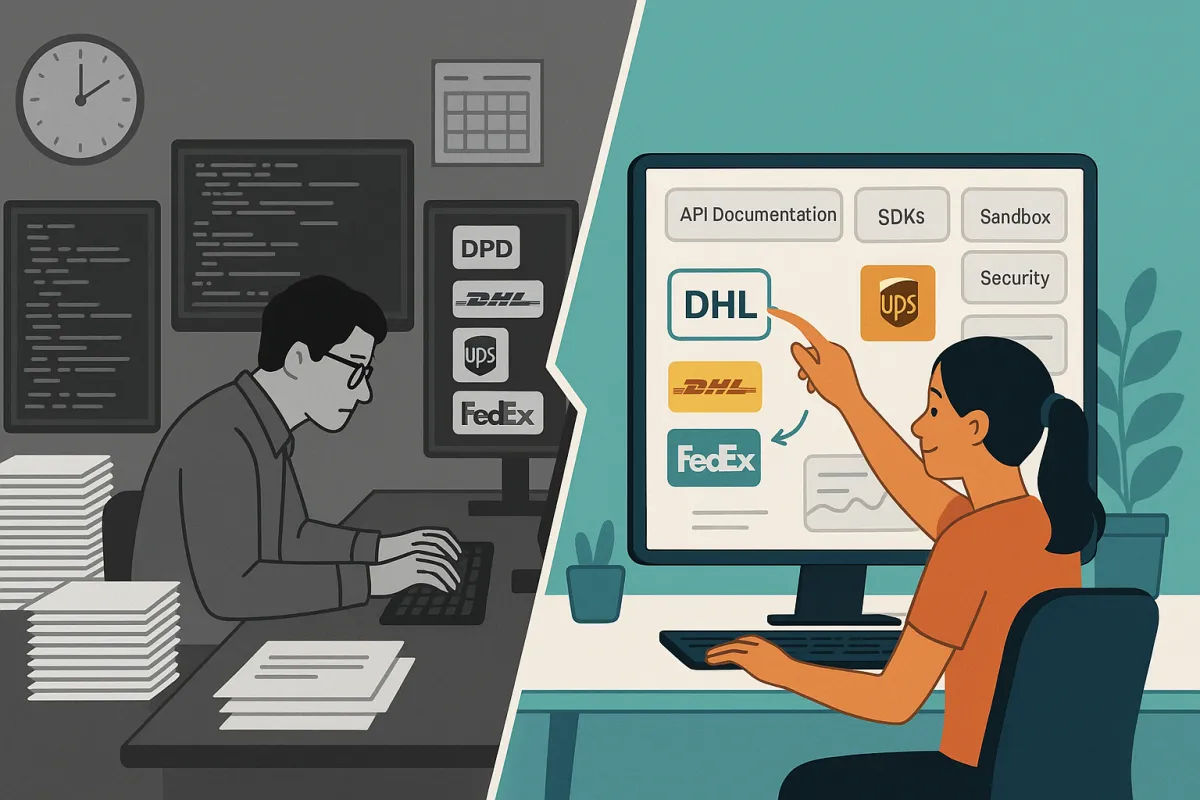
IntelliTrans just launched its API Platform Developer Portal in February 2026, targeting a problem that transportation professionals know all too well: integration delays, fragmented systems, and extended IT cycles that slow operational progress. But this announcement signals something bigger than a single vendor release.
European shippers are facing a perfect storm. TMS connectivity has improved significantly with vendors shipping more prebuilt connectors and cleaner links, yet most mid-to-large manufacturers and wholesalers still rely on their IT departments for every carrier integration. The math is simple: with hundreds of potential carrier partners and constant API changes, traditional custom development approaches create bottlenecks that cost weeks or months per integration.
The self-service TMS integration platform represents a fundamental shift. Instead of waiting for IT resources to become available, operations teams can directly connect new carriers using standardized documentation and testing environments. This makes it easier for shippers and partners to connect in a way that's practical, scalable, and aligned with how they already operate today.
Understanding Self-Service TMS Developer Portals
Think of a self-service TMS integration platform as the difference between hiring a custom developer for every website versus using WordPress. The self-service portal offers centralized API documentation, SDK code samples, and a live testing environment to help developers onboard faster and integrate with greater confidence.
These platforms typically include five core components:
- Interactive API documentation that lets you test calls directly in the browser
- Pre-built SDKs in common programming languages
- Sandbox environments for safe testing without affecting production data
- Authentication frameworks that handle security protocols automatically
- Real-time monitoring dashboards for tracking integration health
The business case is compelling. Where custom carrier integrations typically take 2-4 weeks and require specialized developer knowledge, self-service platforms can reduce that to days. The platform addresses these challenges by providing a centralized, guided experience for connecting carriers, brokers, and enterprise systems without requiring customers to replace existing integrations or change how they run their operations.
Modern TMS providers like Cargoson, nShift, and FreightPOP already offer some level of self-service connectivity. However, the depth and sophistication of these platforms varies significantly from basic REST endpoints to full-featured developer ecosystems.
What European Shippers Must Evaluate
Not all self-service platforms are created equal. The difference between a basic API documentation site and a true developer portal can determine whether your integration succeeds or becomes another IT project that drags on for months.
API Documentation Quality goes beyond just listing endpoints. Look for platforms that include real-world examples, error handling scenarios, and workflow diagrams. The API Platform Developer Portal delivers immediate support for five core operational use cases across freight operations: shipment tendering, real-time status updates, multi-modal freight shipment exchange, yard management integrations with ERP systems, and partner onboarding and authentication.
Pre-built connectors matter more than API flexibility for most European shippers. Your platform should include ready-made connections for major carriers like DPD, DHL, UPS, FedEx, and regional players specific to your markets. Cargoson, for example, maintains over 200 pre-built carrier connections that work out of the box.
Testing environments separate professional platforms from amateur efforts. It supports multiple use cases across truck, rail, and multimodal freight workflows, enabling more consistent, real-time data flow across the transportation ecosystem. You need sandboxes that mirror production behavior without risking real shipments or customer data.
Security compliance becomes non-negotiable when you're connecting to multiple carrier APIs. Modern platforms like Qargo maintain ISO/IEC 27001:2022 certification, which supports security controls and helps customers meet rigorous cybersecurity expectations. Look for platforms that handle OAuth, API keys, and webhook security automatically.
5-Phase Implementation Strategy
Phase 1: Platform Assessment starts with identifying your current integration pain points. Document how long your last three carrier integrations took, what resources were required, and where delays occurred. Many organizations expect the same capabilities and maturity from newer systems that have evolved over several decades, so set realistic expectations about platform maturity versus your requirements.
Create a vendor shortlist based on your specific carrier mix. If 60% of your volume goes through German carriers, prioritize platforms with strong DACH market coverage. European shippers often overlook this step and end up with platforms optimized for North American carriers.
Phase 2: Pilot Integration should focus on 2-3 carriers that represent different complexity levels. Start with a simple parcel carrier, add a less-than-truckload provider, and include one multimodal partner. This gives you realistic data about platform capabilities without overwhelming your team.
Set specific success metrics: integration time, number of support tickets required, and ongoing maintenance effort. Don't just measure whether the integration works, but how much ongoing effort it requires to maintain.
Phase 3: Documentation and Training often gets rushed, but determines long-term success. Any new tech introduction requires mental effort from your organization, so emphasizing streamlining the integration process becomes critical. Create internal documentation that bridges the gap between platform documentation and your specific business processes.
Train multiple team members on basic platform operations. The goal is reducing dependency on single individuals who become integration bottlenecks.
Phase 4: Scaled Rollout should happen in waves based on carrier volume or strategic importance. High-volume carriers get priority, followed by carriers in new markets you're expanding into. Adoption is on track to grow in 2026 as more organizations realize the operational benefits.
Phase 5: Continuous Optimization includes monitoring integration performance and staying current with platform updates. Modern transportation software increasingly integrates via APIs, providing real-time rate access, smoother onboarding, and high-fidelity shipment status updates across ecosystem partners.
Common Implementation Pitfalls
The biggest mistake European shippers make is treating self-service platforms as completely autonomous. Yes, these platforms reduce IT dependency, but they still require governance and oversight. Without proper change management, operations teams can create integration sprawl that's harder to manage than the original custom development approach.
Testing gets shortchanged when integrations appear to work quickly. High-volume, multi-region operations benefit most from systems that support dynamic routing, automated dispatch, and proactive exception handling. Spend extra time testing edge cases: what happens when carriers change their API endpoints? How does the platform handle timeouts or partial data responses?
User adoption challenges arise when operations teams resist learning new tools. The platforms may be self-service, but they're not always intuitive. Budget time for proper training and create internal champions who can help colleagues through the learning curve.
Integration complexity gets underestimated because self-service platforms make simple integrations look easy. Complex multimodal shipments, custom EDI mappings, and specialized carrier requirements still need careful planning and testing.
ROI Calculation Framework
Time savings provide the most obvious ROI metric. If custom integrations took 3 weeks and cost €15,000 in developer time, reducing that to 3 days saves €12,000 per integration. With 20 new carrier integrations annually, that's €240,000 in direct savings.
Cost reduction extends beyond development time. Self-service platforms reduce ongoing maintenance overhead because updates happen centrally rather than requiring individual integration updates. Factor in reduced IT staff time for carrier troubleshooting and support.
Risk mitigation has harder-to-quantify but significant value. Standardized integration approaches reduce the risk of data breaches, API incompatibilities, and integration failures that can disrupt operations for days.
These trends translate into real business outcomes: lower operational costs via automated planning and dynamic routing, higher delivery reliability through enhanced real-time visibility, stronger customer satisfaction with proactive communication and transparency, better resource allocation enabled by predictive planning and simulation.
Future-Proofing Your Integration Architecture
API-first design principles matter more than specific platform features. 2026 marks a definitive pivot: modern transportation software increasingly integrates via APIs, providing real-time rate access, smoother onboarding, and high-fidelity shipment status updates across ecosystem partners. Choose platforms built around REST APIs with clear versioning strategies rather than proprietary integration methods.
Hybrid EDI/API transition strategies acknowledge reality: many European carriers still use EDI for critical functions while offering APIs for newer capabilities. Your platform should handle both protocols seamlessly rather than forcing you to choose between them.
Building internal capabilities while leveraging self-service tools creates the best long-term outcome. Train your team to understand API fundamentals even when using self-service platforms. This knowledge helps with troubleshooting, custom requirements, and platform evaluation as your needs evolve.
The European TMS market is consolidating around platforms that offer both powerful self-service capabilities and the flexibility to handle complex integration requirements. Expect more M&A activity in the TMS market, with steady consolidation creating new combinations that change the competitive landscape as more providers bring planning, execution and visibility tools onto a single platform.
Success in 2026 depends on choosing platforms that balance self-service convenience with the depth and security European enterprises require. The organizations that get this balance right will cut carrier onboarding time by 75% while building more resilient, scalable integration architectures for the future.