
Production-Ready Carrier API Monitoring: How European Shippers Can Detect Complex Failure Patterns and Prevent Integration Outages Before They Impact Shipments
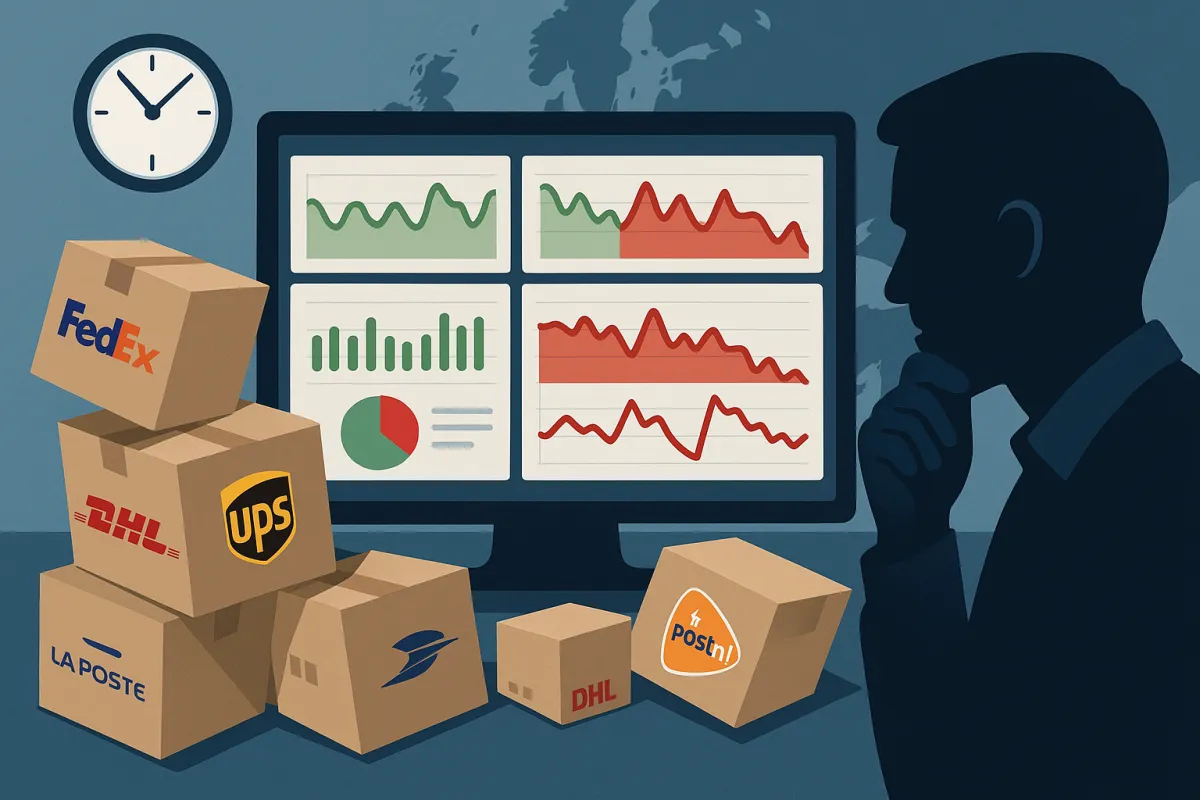
Average API uptime fell from 99.66% to 99.46% between Q1 2024 and Q1 2025, resulting in 60% more downtime year-over-year. For European shippers managing critical carrier integrations across UPS, FedEx, DHL, and regional partners like La Poste and PostNL, those numbers represent more than statistics. For high-traffic or business-critical APIs especially, downtime impacts company revenue and end user trust. European shippers can't afford 55 minutes of weekly downtime when managing time-sensitive deliveries.
October's cascade of carrier API failures exposed what many of us already suspected: uptime monitoring isn't enough anymore. While your basic monitoring tools showed green status pages, customers couldn't generate shipping labels, rate requests returned timeouts, and tracking updates vanished. The problem? Traditional monitoring misses the sophisticated failure patterns that modern carrier APIs create.
The Hidden Cost of Carrier API Reliability Crisis in European Operations
47% of those who experienced an incident in the past 12 months reported remediation costs of more than $100,000 — and 20% said costs exceeded $500,000. Enterprise shippers aren't just facing higher costs from downtime itself. The cascading effects multiply across your entire operation when carrier APIs fail.
Real carrier API monitoring requires understanding what specific failure patterns look like in production. You need systems that detect authentication cascade failures before they knock out your entire order flow. This month's outages taught us that the old "ping and pray" approach falls apart when modern APIs fail in sophisticated ways.
Modern TMS platforms like Cargoson, nShift, and MercuryGate handle millions of carrier API calls daily. When their monitoring systems failed during October's outages, the impact rippled through thousands of European businesses. That number represents 350,000+ carrier integration teams discovering their monitoring systems weren't built for multi-carrier environments where FedEx, DHL, and UPS APIs all throttle simultaneously
The cost calculations become staggering when you consider peak season volumes. A single hour of carrier API downtime during Black Friday can block thousands of shipping labels, delay order fulfillment by days, and trigger penalty clauses with retail partners who demand guaranteed delivery windows.
Why Standard Monitoring Tools Miss Critical Carrier API Failure Patterns
Standard monitoring tools miss the critical patterns unique to carrier APIs. While Datadog might catch your server metrics and New Relic monitors your application performance, neither understands why UPS suddenly started returning 500 errors for rate requests during peak shipping season, or why FedEx's API latency spiked precisely when your Black Friday labels needed processing.
Your alerting should distinguish between issues that affect revenue (label generation failures during peak ordering) and background problems (delayed tracking updates for delivered packages). Most monitoring tools treat a 500ms delay in tracking updates the same as a 500ms delay in rate calculation during checkout. One frustrates customers checking shipment status. The other costs immediate sales.
Authentication cascade failures create the most insidious problems. The issue manifested as intermittent 401 responses during peak traffic periods, particularly affecting OAuth token refresh operations. Your monitoring shows successful API calls, but customers can't complete orders because token refresh logic breaks under load.
October's failures demonstrated why treating 429 responses like outages creates unnecessary panic. But SLA breaches from rate limiting require different responses than infrastructure failures. When DHL returns a 429, your system should implement exponential backoff with jitter, not immediately failover to backup carriers.
European carriers add regulatory complexity that standard tools ignore completely. European carriers experienced regulatory compliance issues that created API behavior changes without proper deprecation warnings. To comply with new customs regulations, carriers, including USPS and others, are now requiring six-digit Harmonized System (HS) codes on all international commercial shipments. Effective September 1, 2025, shipments without these codes may be delayed or rejected by customs authorities.
Essential Components of Production-Ready Carrier API Monitoring
Your carrier API monitoring needs different capabilities than general application monitoring. Standard tools like Datadog work well for infrastructure metrics, but carrier-specific monitoring requires understanding shipping domain logic. You need systems that understand the difference between rate shopping failures and label generation problems.
Business logic validation goes beyond HTTP response codes. Carrier APIs also have unique failure modes. Rate shopping might work perfectly while label creation fails silently. Tracking updates could be delayed by hours without any HTTP error status. Your generic monitoring won't catch these carrier-specific problems until they've already impacted shipments.
Build monitoring dashboards that display carrier health alongside business metrics. Track "time to first label" alongside API response times. Monitor "successful delivery confirmations" alongside webhook delivery rates. Your on-call engineers need to understand business impact, not just technical metrics.
Weighted health scoring based on shipping volume impact makes alerts actionable. A UPS outage affecting 60% of your daily volume needs different response priorities than a regional carrier handling 5% of shipments. The monitoring needs to track these negotiated SLAs per carrier, not generic uptime metrics.
Monitoring Architecture Layers European Shippers Need
Your architecture needs three distinct monitoring layers. First, endpoint availability monitoring tracks basic connectivity using synthetic transactions that mirror actual shipping workflows. Unlike simple ping tests, these check full request-response cycles with valid authentication tokens.
Second, response validation monitoring examines API payloads for carrier-specific data structures. The Carrier Health Engine maintains baseline performance profiles for each carrier and can detect when UPS response times suddenly jump or when DHL starts returning malformed XML.
Third, business logic validation ensures APIs return functionally correct responses. A 200 OK response from FedEx's rate API means nothing if the returned rates are $0 or missing service levels your customers expect.
Consider implementing circuit breaker patterns with carrier-specific thresholds. UPS might handle 100 requests per minute reliably, while FedEx starts rate-limiting at 75. Your monitoring should understand these per-carrier characteristics and adjust alerting accordingly.
Most carrier integration platforms serve multiple shippers. Your monitoring architecture must isolate performance data and alerting per tenant while efficiently sharing carrier connections. Tenant A shouldn't receive alerts about Tenant B's failed rate requests, but both need to know if UPS is experiencing a system-wide outage.
Implementing Carrier-Specific Intelligence in Your Monitoring Stack
However, carrier APIs don't follow consistent header standards. FedEx uses proprietary headers, UPS implements rate limiting through error codes, and DHL varies by service endpoint. Successful multi-carrier strategies require normalization layers that translate different throttling signals into consistent internal metrics.
Each major carrier has distinct performance characteristics. UPS APIs typically show higher latency during their 6-8 PM ET daily maintenance window. FedEx rate APIs become unreliable on Sundays when they process weekly rate updates. DHL Express shows consistent performance degradation on Monday mornings as European logistics centers process weekend backlogs.
The multi-carrier test environment included realistic failure scenarios: If DHL Express API failures spike on Mondays, investigate their system maintenance schedules. We tracked this pattern and found that predictable maintenance windows create cascading failures when adaptive algorithms don't account for carrier-specific downtime patterns.
European carriers require additional monitoring complexity. European regulatory compliance adds complexity that most monitoring systems ignore. Royal Mail services to Canada will be suspended and will hold items destined for Canada until the CUPW national disruption is over. These aren't API failures in the traditional sense, but they disrupt shipping workflows just as effectively. Monitor regulatory announcements and service advisories alongside technical metrics.
Platform-Agnostic Monitoring for Multi-Vendor Environments
Vendor-agnostic monitoring becomes crucial when managing platforms like EasyPost, nShift, and Cargoson simultaneously. Our testing showed that platform-specific monitoring tools create blind spots when problems span multiple integrations.
Avoiding vendor lock-in requires building monitoring abstractions that work across different integration approaches. Whether you connect directly to carrier APIs or use aggregation platforms like ShipEngine, your monitoring should provide consistent visibility.
Platforms like Cargoson, nShift, and Descartes build compliance monitoring into their carrier integration layers, but if you're managing direct carrier connections, you need to track these changes manually. Create unified dashboards that surface both technical performance and business compliance issues regardless of integration method.
Advanced Monitoring Strategies for Peak Season Reliability
When FedEx, DHL, and UPS APIs all throttle simultaneously during Black Friday volume, those theoretical improvements disappear fast. Peak season monitoring requires strategies beyond normal operational monitoring.
Predictive alerting uses historical patterns to anticipate failures before they occur. If DHL consistently degrades performance when processing 150% normal volume, your monitoring should alert operations teams before reaching that threshold, not after customers report failed label generation.
Most importantly, test failover logic during low-impact periods rather than discovering gaps when every minute of downtime costs revenue. Schedule quarterly failover tests during off-peak hours. Document which carriers maintain performance during partner outages. Build automation that routes critical shipments away from degraded carriers before SLA breaches occur.
Create alerting for service restrictions that affect your shipping regions. When PostNL announces service suspensions to specific postal codes, your system should automatically adjust carrier selection for affected shipments.
Real-World Monitoring Metrics That Matter
Establish SLAs that reflect actual business requirements. A 2-second response time for rate quotes during checkout matters more than 500ms tracking updates for shipped orders. Align your monitoring thresholds with customer experience requirements, not arbitrary technical benchmarks.
Response time priorities need business context. Rate calculation APIs during checkout flow require sub-second responses to prevent cart abandonment. Label generation can tolerate 3-5 second delays without customer impact. Tracking updates become important for customer satisfaction but rarely drive immediate business decisions.
Organizations that implement strategic API usage patterns typically see 30-40% reduction in monitoring costs while improving data quality. This improvement comes from focusing monitoring resources on business-critical integrations rather than monitoring everything equally.
Building Your Carrier API Monitoring Implementation Plan
Start with financial stability assessment of monitoring vendors. Whether you use Datadog, New Relic, or open-source alternatives like Prometheus, the key is tracking trends over time and correlating outages with business metrics like failed label generations or delayed shipments. But consider specialized platforms designed for shipping workflows.
Consider specialized tools for shipping API monitoring. Platforms like Better Stack, Treblle, and API Context provide carrier-aware monitoring capabilities. These tools understand shipping domain logic that generic APM platforms miss.
Implementation should start with core TMS functionality monitoring. For integration platforms, solutions like Cargoson build monitoring into their carrier abstraction layer. This means you get carrier-specific health metrics without building custom monitoring for each API. Compare this approach against managing individual carrier monitoring with platforms like ShipEngine or EasyPost.
Progressive rollout strategy prevents monitoring system failures from impacting production shipping. Start monitoring non-critical carriers first. Build confidence in alerting accuracy before deploying monitoring for high-volume shipping partners.
Vendor Selection Criteria for European Requirements
European requirements add complexity beyond basic API monitoring. GDPR compliance affects how you store and process carrier performance data. GDPR, CCPA, and SOC 2 compliant monitoring platforms reduce regulatory overhead.
Multi-language dashboard support matters when operations teams span different European countries. Currency handling affects cost-per-incident calculations and budget planning. Design tenant-specific dashboards that show only relevant carrier performance. A tenant shipping exclusively within the EU doesn't need alerts about USPS domestic service issues.
Document your incident response procedures with specific carrier failure scenarios. When La Poste's authentication fails, your team should know whether to implement immediate carrier failover or wait for the auth system to recover. These decisions require carrier-specific knowledge that most monitoring tools don't provide.
Integration capabilities with European ERP systems like SAP become crucial for correlating shipping performance with business operations. Choose monitoring platforms that provide APIs for feeding performance data into business intelligence systems that track shipping costs against SLA compliance.
Remember that production-ready carrier API monitoring isn't about perfect uptime metrics. October's failures taught us that carrier API monitoring succeeds when it focuses on business outcomes, not just technical metrics. Your monitoring success depends on preventing revenue impact, not achieving theoretical availability targets that ignore shipping business realities.