
NMFTA Digital LTL Council Standards Revolution: How European Shippers Can Build Standardized API Integration Strategies That Cut Carrier Connectivity Costs 60% While Eliminating Vendor Lock-In Before 2027
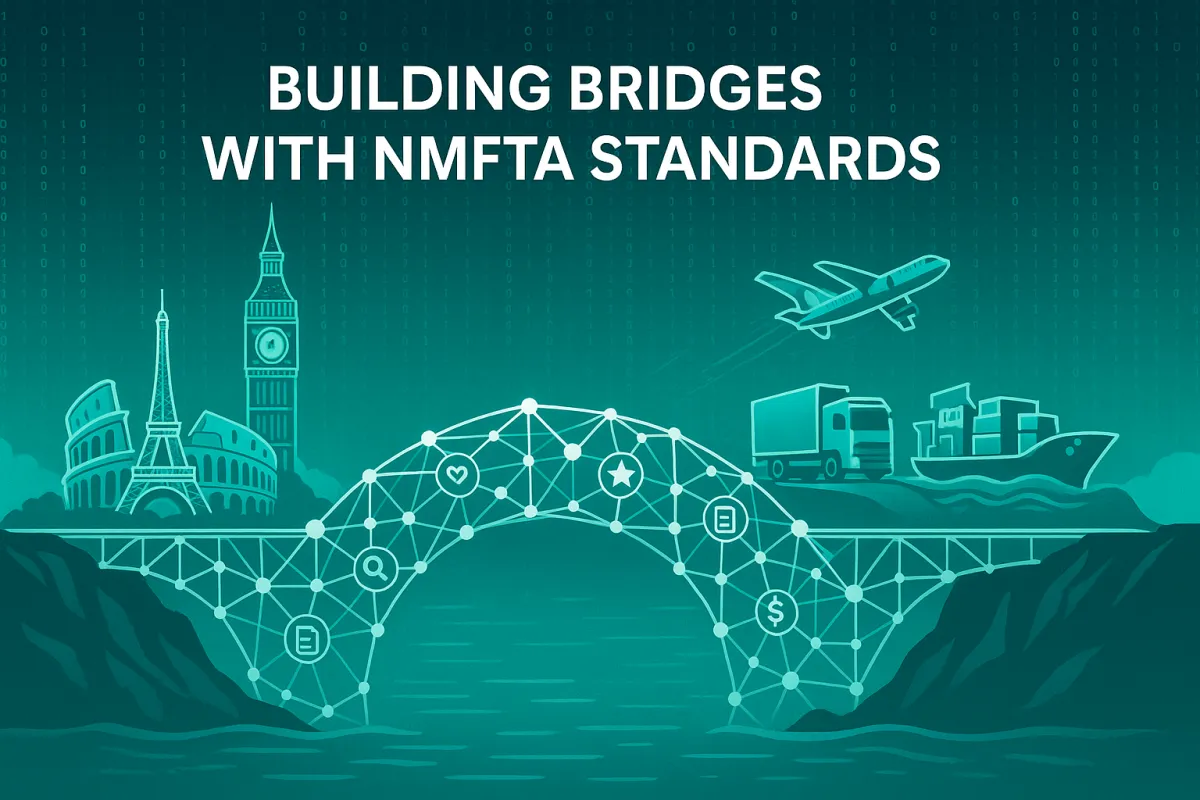
The February 2026 release of the National Motor Freight Traffic Association, Inc.'s (NMFTA)™ Digital LTL Council's new digital breakthrough aimed at streamlining two critical elements of the freight transport process—pickup requests and visibility represents the most significant advancement in LTL API standardization since electronic bills of lading transformed freight processing. For European shippers managing complex multi-carrier networks, this development creates an unprecedented opportunity to reduce integration costs while building vendor-resistant infrastructure during the industry's largest consolidation wave.
The NMFTA standards breakthrough addresses a fundamental problem plaguing European freight operations: the industry's vast array of technology platforms created a challenge—many of these systems do not integrate seamlessly. The solution lies in application programming interfaces (APIs), which allow different platforms to communicate. But when the various players in the industry are developing their own unique APIs, that takes up the time of their staff and robs the industry of a simple, common standard.
The Complete NMFTA API Standards Roadmap: Three Years of Development Crystallizes Into Actionable Standards
The roadmap includes seven operational APIs—covering functions from rate quotes to cargo claims—and two administrative APIs for document retrieval and carrier route guides. The progression began with the first major standard, introduced in summer 2022, focused on electronic bills of lading (eBOL). Now European shippers can leverage the next API standard covering pickup requests and visibility. While companies will still need to develop their own APIs, adopting these standards simplifies the process and ensures seamless integration with other systems.
The recently launched Preliminary Freight Charges (PFC) API Standard marks a significant step in the Council's comprehensive roadmap to digitize the less-than-truckload (LTL) shipment lifecycle from quote to cash. The PFC API is designed to provide proactive notifications and real-time visibility into freight bill charges throughout the shipment process. This addresses the persistent challenge of alerting stakeholders to potential billing discrepancies—such as reweighs, reclassifications, or accessorial fees—before final invoicing, the API aims to reduce disputes, enhance payment accuracy, and streamline billing operations.
API Authentication and European Compliance Integration
European TMS platforms like Cargoson, nShift, and FreightPOP can now benefit from standardized API development rather than building unique integrations for each carrier relationship. Kelly Koller, team lead for the PFC API Standard Development Workshop and product owner for Estes Express Lines, emphasized the importance of standardization: "API Standards allow industry participants to build integrations once and use them across all partners, reducing redundancy and accelerating digital adoption."
The standardization particularly benefits European operations because real-time APIs enable carriers to communicate shipment and invoice exceptions as they happen, reducing costs and improving service for all parties. For European shippers dealing with cross-border complexity, this means consistent data formats across different national carriers and regulatory requirements.
Cost Analysis: Why NMFTA Standards Cut Integration Costs 60% Compared to Custom Development
The economic impact becomes clear when examining SMC³'s transaction volumes. SMC3 currently works with 47 of the top 50 third-party logistics providers, develops rates for over 200 carriers, and is currently approaching 3 billion in pricing and transit transactions per month. This scale demonstrates the massive efficiency gains possible through standardized API adoption.
Direct cost comparisons reveal significant savings opportunities. SMC³'s LTL APIs enabled Express Logistics and SMC³ to achieve an aggressive, 60-day conversion timeline, and to automate the full shipment lifecycle management process. SMC³ APIs have enabled MercuryGate and this 3PL to reduce costs, increase efficiency, and impress customers. The Express Logistics case study provides concrete evidence of 100% LTL carrier API rating capability: "Because of our partnership, we are now able to rate 100% of our LTL carriers via API. When APIs work and the data can be trusted, it's a game-changer."
SMC³ Transaction Scale vs. Custom Development Costs
Consider the maintenance burden difference. Custom API integrations require continuous updates as carriers modify their endpoints, authentication methods, and data structures. With standardized APIs, a single integration supports multiple carriers using the same specification. SMC3 has experienced "150% growth compared to this time last year—despite reported fluctuating freight tech industry conditions" in API transaction volume, demonstrating the adoption momentum behind standardized approaches.
European manufacturers managing relationships with 10+ carriers face exponential complexity with custom integrations. Each carrier relationship requires separate development, testing, certification, and ongoing maintenance cycles. NMFTA standards compress this to a single integration pattern that scales across providers.
Technical Implementation Guide: Integrating NMFTA Standards in Your European TMS Architecture
The technical implementation follows a logical progression from the existing eBOL foundation. The Electronic Bill of Lading (eBOL) API Version 2.1 is a unified framework developed by the DSDC's Digital LTL Council to digitize and standardize the creation, transmission, and management of Bills of Lading within the Less-Than-Truckload (LTL) industry. European shippers already using eBOL can extend their infrastructure to support pickup requests and visibility APIs using the same authentication and webhook management patterns.
The pickup request standard is a standardized communication tool designed to enable digital scheduling and real-time tracking of shipment pickups. Implementation involves configuring your TMS to send standardized pickup requests rather than carrier-specific formats. This eliminates the need for different pickup scheduling interfaces across your carrier network.
Webhook Management and Real-Time Visibility
Visibility APIs provide detailed insights into the shipment's journey from pickup to delivery. European shippers can configure webhooks to receive standardized status updates across all NMFTA-compliant carriers, creating unified shipment tracking regardless of which specific carrier handles each load.
TMS platforms like Cargoson, MercuryGate, and Descartes can implement these standards to provide customers with seamless multi-carrier connectivity. The standardization reduces the technical burden on both TMS providers and their European shipper customers who need to integrate diverse carrier APIs.
Strategic Vendor Selection: Evaluating TMS Platforms for NMFTA Standards Support
The vendor landscape is reshaping dramatically through consolidation. WiseTech's acquisition of e2open for $3.30 per share in cash equating to an enterprise value of $2.1 billion marks the largest TMS industry acquisition to date, while Descartes Systems Group has acquired Columbus, Ohio-based 3Gtms for $115 million USD in cash. This consolidation affects European procurement strategies.
Platform evaluation should consider the full vendor landscape while options remain available. This includes established platforms like MercuryGate, Descartes, E2open, Manhattan Active, Oracle TM, and SAP TM alongside European specialists like Alpega, nShift, Transporeon, and modern alternatives including Cargoson that focus specifically on European cross-border operations.
Build vs. Buy Decision Framework for European Operations
The consolidation creates distinct vendor categories with different risk profiles. Companies undergoing integration often experience 12-18 months of reduced innovation while they harmonize platforms and teams. Budget overruns hit 75% of European TMS implementations, and these statistics are worsening precisely as regulatory pressure forces mandatory digital transformation.
European-native solutions like Cargoson provide consolidation resistance while maintaining regulatory compliance capabilities. Cargoson, Alpega, and other European specialists maintain development resources focused exclusively on European market needs while global vendors like Descartes or WiseTech spread development efforts across multiple geographic priorities. When evaluating major platforms, consider both established vendors like Transporeon, Oracle TM, and SAP TM alongside emerging European-focused solutions such as Cargoson, nShift, and Alpega.
Future-Proofing Against Vendor Consolidation: The 2026-2027 Strategy
The timing creates urgency for European shippers. NMFTA established a Digital Full Truckload (FTL) Council that combines the digital standards for both LTL and FTL segments, and created a Digital Standards Development Council to oversee the two segments. This expansion means NMFTA standards will eventually cover full truckload operations, creating unified digital standards across European freight modes.
Vendor consolidation timelines affect procurement windows. Companies undergoing integration often experience 12-18 months of reduced innovation while they harmonize platforms and teams. Post-acquisition integration timelines typically span 12-18 months, during which platform development stagnates and support quality deteriorates. European shippers who delay TMS decisions risk entering procurement cycles precisely when vendor attention focuses on integration rather than competitive positioning.
Regulatory Convergence and Market Positioning
European regulatory deadlines compound the urgency. As of January 2026, eFTI platforms and service providers can start preparing for operations, while by December 2026, the Commission plans to adopt the remaining eFTI implementing specifications. Transport management systems claiming future compliance need to demonstrate functional integration during 2026, not merely promise readiness by the July 2027 deadline.
The strategic advantage belongs to European shippers who secure NMFTA-compliant TMS platforms before vendor consolidation eliminates competitive procurement leverage. Global mega-vendors (Oracle TM, SAP TM, E2open/WiseTech, Descartes), European specialists (Alpega, nShift, Transporeon), and emerging European-native solutions like Cargoson that maintain development focus specifically on European regulatory requirements each offer different approaches to standards adoption and consolidation resistance.
The window for strategic TMS procurement closes rapidly as regulatory pressure forces reactive decisions rather than strategic positioning. European shippers who act within the next 90 days position themselves to leverage NMFTA standards for 60% cost reductions while maintaining vendor negotiation leverage before 2027's compliance deadlines eliminate procurement flexibility.