
G2V2 Smart Tachograph and Carrier OAuth Integration Crisis: How European TMS Teams Can Build Unified Monitoring That Prevents July 2026 Compliance Cascade Failures While Surviving FedEx SOAP Retirement
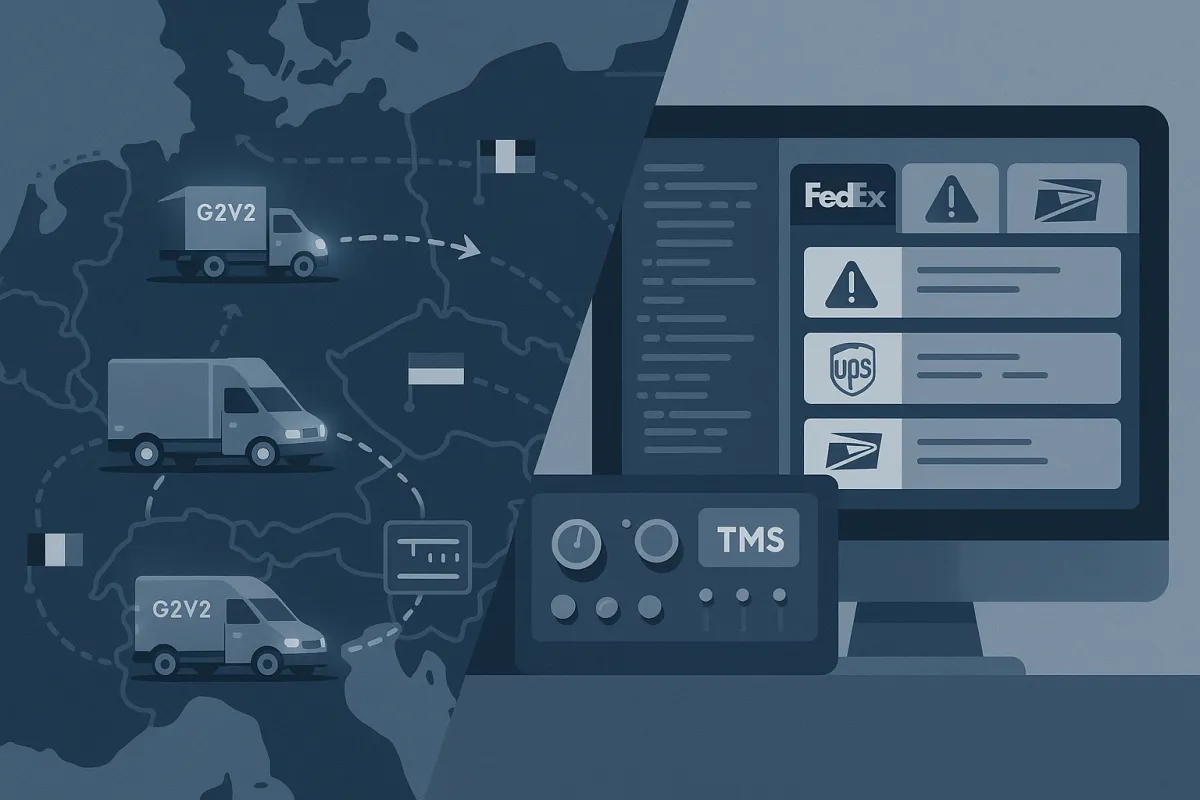
European transport teams managing cross-border operations face an unprecedented challenge: from July 1, 2026, vans between 2.5 and 3.5 tonnes used for international goods transport or cabotage must carry a second-generation smart tachograph (G2V2), while simultaneously navigating FedEx's remaining SOAP-based endpoints being fully retired in June 2026 and UPS's OAuth 2.0 migration that resulted in 73% of integration teams reporting production authentication failures.
This convergence creates unique monitoring challenges that generic tools completely miss. Your existing Datadog dashboards won't catch when UPS authentication latency increases by 300ms, followed by shipping label failures within 15 minutes, or when G2V2 tachograph compliance violations cascade into operational shutdowns just as your OAuth tokens expire across multiple carriers.
The Perfect Storm Hitting European Transport Teams July 2026
From 1 July 2026, vans with a gross vehicle weight of 2.5–3.5 tonnes used for international goods transport will be required to use second-generation smart tachographs (G2V2), fundamentally transforming how European manufacturers manage their light commercial vehicle fleets. The regulatory scope is massive: this affects up to three million vehicles across Europe, creating unprecedented demand for specialized workshops and certified installations.
The cost reality is staggering. Logistics professionals in Poland are reporting installation costs reaching 3,500-4,700 EUR per vehicle, which, combined with other costs such as purchasing software and employee training, can seriously threaten the profitability of small enterprises. Installation workshops across Germany, Poland, and the Netherlands are warning of capacity constraints that are pushing Q2 installation costs 40–60% above what early movers paid.
But the timing couldn't be worse. FedEx SOAP endpoints retire on June 1, 2026, while USPS Web Tools shut down on January 25, 2026. These aren't just API upgrades—they're complete authentication overhauls requiring both carriers moving to a RESTful API using a more advanced security model like OAuth 2.0 instead of single access key authentication.
Modern TMS platforms like Cargoson, alongside competitors such as Descartes, MercuryGate, and Blue Yonder, need integrated approaches that prevent these regulatory and technical deadlines from creating operational cascades.
Understanding G2V2 Data Requirements for TMS Integration
The Gen2V2 includes a mandatory ITS interface with Bluetooth connectivity for secure data exchange with third-party systems, meaning fleet telematics platforms can pair with the tachograph to access vehicle location, speed, driver activity, and vehicle events in real time. This creates technical integration requirements most TMS teams haven't budgeted for.
The second version smart tachograph comes with several new key features, such as the automatic recording of border crossings, the recording of loading and/or unloading operations, improved capability for software updates, as well as greater anti-tampering resistance. Your TMS platform must handle this data stream while maintaining compliance across different national requirements.
German tachograph data has different validation requirements than French driver hour regulations, requiring frameworks that establish consistent data formats while accommodating country-specific variations. European TMS platforms like Cargoson, nShift, and Alpega are building regulatory-first approaches specifically for this cross-border complexity.
Carrier Authentication Cascade Failure Patterns
By February 3rd, 73% of integration teams reported production authentication failures after similar UPS OAuth migrations—and those were teams who spent months perfecting sandbox testing. Within weeks of deployment, 73% of integration teams reported production authentication failures despite their OAuth 2.0 implementations passing every sandbox test.
The problem isn't just technical complexity. Standard monitoring tools like Datadog and New Relic miss the authentication patterns that break carrier integrations—they track HTTP status codes and response times, but can't detect when OAuth token refresh logic fails under concurrent load or when carrier-specific rate limits create authentication cascades.
Here's what actual cascade failures look like: FedEx uses proprietary headers, UPS implements rate limiting through error codes, and DHL varies by service endpoint. When your system hits FedEx's rate limits, you get proprietary throttling signals, while DHL's authentication expires with error responses that look nothing like UPS's OAuth failures.
Enterprise shippers processing thousands of addresses during order imports face immediate bottlenecks, especially when USPS's new APIs enforce strict rate limits of approximately 60 requests per hour, down from roughly 6,000 requests per minute without throttling in the legacy system.
Building Production-Grade OAuth Monitoring for Multi-Carrier Operations
Authentication health monitoring requires carrier-specific approaches that standard tools miss. Set authentication success rate SLIs at 99.5% for UPS, 99.0% for USPS, and 99.2% for FedEx based on their infrastructure reliability patterns—these thresholds reflect realistic expectations, not aspirational targets.
Token health scoring predicts failures before they affect shipments by assigning scores based on token age, refresh frequency, and recent authentication latency. Your monitoring architecture needs to track per-carrier metrics, not aggregate across all integrations.
When authentication starts failing across multiple tenants simultaneously, that signals a carrier-wide issue requiring different escalation than individual token problems. Monitor whether other tenants experience similar issues within the next few minutes—if so, escalate immediately to carrier communications rather than assuming isolated tenant problems.
Teams using ShipStation, Shippo, EasyPost, and Cargoson implementations need these capabilities because enterprise platforms built abstraction layers that handle the OAuth complexity, implement intelligent rate limiting queues, and provide fallback mechanisms when USPS quotas are exceeded.
Unified G2V2 and API Monitoring Architecture
The breakthrough insight: G2V2 tachograph integration and carrier OAuth monitoring share similar failure patterns—both involve real-time data streams, authentication dependencies, and cross-border compliance requirements. Smart European transport teams are building unified monitoring that correlates tachograph compliance violations with API authentication health.
Second-generation smart tachographs include functions for recording loads and unloads in tachograph memory and on driver cards, with driver menus including options to mark these activities along with automatic recording of time and location, streamlining logistics management and eliminating manual documentation. Your monitoring framework should validate these automated border recordings while simultaneously checking API token health.
Implementation requires cloud platform centralization. When a truck crosses from Germany into Poland, your system needs to automatically switch compliance monitoring while maintaining consistent operational visibility, validating driver qualifications, vehicle permits, cargo documentation, and customs requirements in real-time.
The correlation patterns matter: when FedEx authentication starts failing during peak shipping periods, your system should automatically verify that tachograph data downloads are completing successfully. Authentication failures often coincide with driver hour compliance violations, creating compound regulatory risks that siloed monitoring systems miss entirely.
Emergency Response Protocols for July 2026 Deadline Management
Experience from the G2V2 rollout has shown that leaving retrofits until the last moment creates bottlenecks, with workshops facing high demand, waiting times increasing, and costs rising unexpectedly. Your emergency protocols must account for both technical failures and capacity constraints.
Workshop booking strategies require parallel planning. The phased implementation approach that works: fleet analysis in Q2 2025, workshop booking by Q3 2025, TMS vendor selection by Q4 2025, and integration testing starting Q1 2026, accounting for both regulatory deadlines and vendor availability constraints.
Rollback procedures become complex when dealing with regulatory compliance. Unlike typical software deployments, failure to install the G2V2 device on time, or fitting an older tachograph, will constitute non-compliance with the law. Your contingency planning must include legal compliance pathways, not just technical rollbacks.
Emergency authentication fallbacks require carrier-specific strategies. When UPS OAuth fails, some teams route shipments through FedEx temporarily, while others maintain backup authentication credentials for critical accounts. Build these scenarios into your July 2026 transition planning.
Budget Protection and Vendor Selection Framework
Plan for 15-20% budget increases in 2026-2027 if reactive, or 8-12% if proactive with proper contract protection, reflecting mandatory eFTI integration, G2V2 tachograph connectivity, and enhanced customs documentation requirements. These aren't optional upgrades—they're regulatory mandates.
Contract protection clauses become essential. If a vendor can't deliver eFTI compliance by January 2026 or tachograph integration by July 2026, that's grounds for contract adjustment or termination. Contract terms should protect against compliance cost escalation and include specific deliverables for G2V2 data integration capabilities.
Vendor evaluation must focus on European regulatory expertise. European specialists like Alpega, Transporeon, nShift, and Cargoson are building regulatory-first approaches designed specifically for cross-border European complexity, while Descartes and SAP TM maintain European data centers and compliance frameworks, with Cargoson building specifically around European regulatory requirements.
The procurement window is closing fast. Your procurement window is closing faster than most teams realize, running through Q1 2026—after which your leverage disappears as regulatory pressure forces decisions. Platforms demonstrating native eFTI integration, automated tachograph data processing, and OAuth 2.0 monitoring capabilities position your operations for success beyond the July 2026 deadline.
Companies that survive this regulatory convergence won't be those with perfect technical execution—they'll be the ones who recognized that integrated monitoring is infrastructure, not a feature, and invested in unified G2V2 and carrier API oversight before the bottlenecks hit.