
FedEx Freight Spinoff June 2026: How European TMS Platforms Must Rebuild Carrier Integrations While Managing Vendor Consolidation and API Reliability Crisis
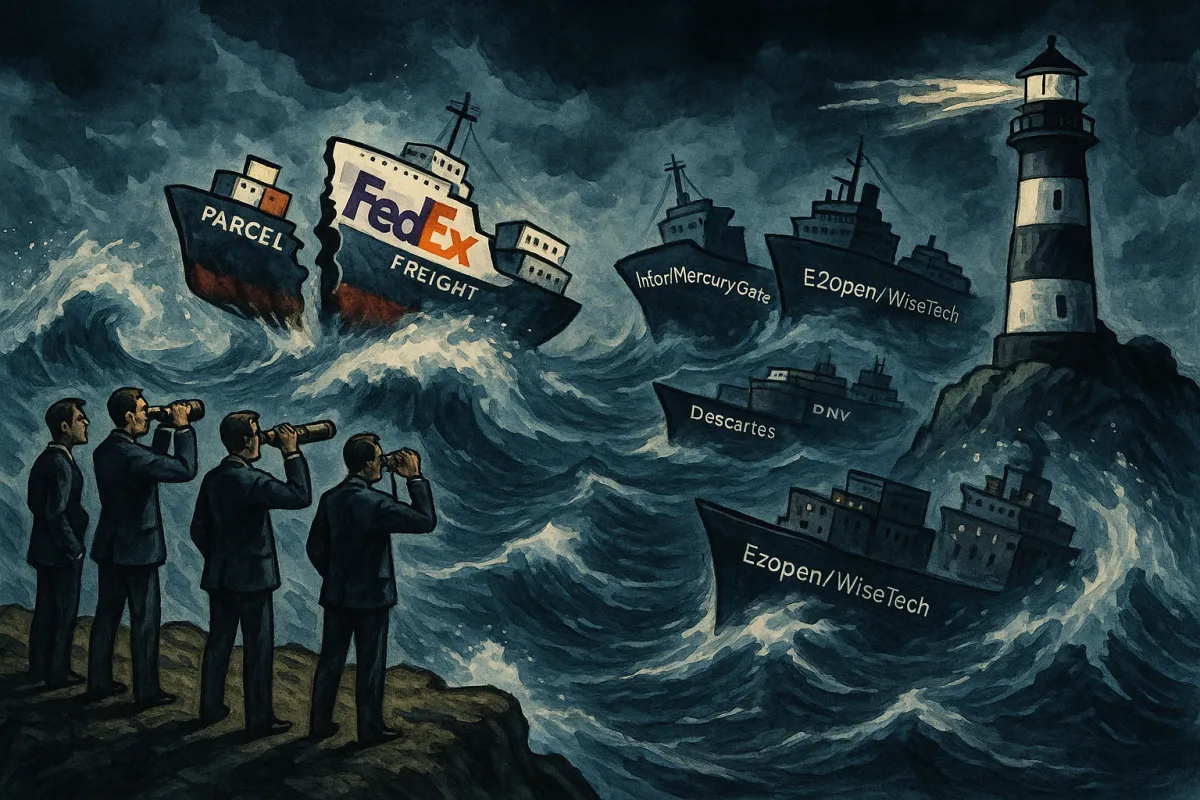
European TMS platforms are facing a perfect storm in 2026. FedEx Freight's spinoff is on track to be completed by June 2026, creating massive integration challenges for the 90,000 daily shipments that currently generates nearly $9 billion in annual revenue. Meanwhile, WiseTech's acquisition of E2open in 2025, Descartes' purchase of 3GTMS for $115 million in March 2025, and Körber's transformation of MercuryGate into Infios following their 2024 acquisition represent just the beginning of a fundamental market restructuring. Add to this the fact that average API uptime fell from 99.66% to 99.46% between Q1 2024 and Q1 2025, resulting in 60% more downtime year-over-year, and you have three converging forces that will reshape how European shippers approach carrier connectivity.
The stakes couldn't be higher. The European TMS market, valued at €1.4 billion in 2024 and growing at a compound annual growth rate of 12.2 percent, is forecasted to reach €2.5 billion by 2029. This growth is happening alongside unprecedented consolidation that's eliminating choice and creating new risks for procurement teams. For IT directors and operations managers at mid-to-large European manufacturers, wholesalers and retailers, the decisions made in the next 18 months will determine integration costs and vendor flexibility for years to come.
What FedEx Freight Spinoff Means for TMS Integration Strategies
Parent company FedEx plans to spend $600 million enhancing IT infrastructure and systems ahead of the spinoff, creating both opportunities and risks for European TMS platforms managing cross-border shipments. This isn't just an American LTL story – European shippers with US distribution operations will face immediate integration challenges.
The most significant change involves contract bifurcation. Most of FedEx Freight's smaller customers have a bundled contract that includes FedEx's parcel shipping services. Bundled contracts feature discounts for parcel delivery services the more LTL volume customers ship. After June 2026, that single, blended contract will give way to two separate agreements, one with FedEx for parcels and one with the new independent freight company.
For European companies with North American operations, this creates procurement complexity they haven't faced before. Volume-based discounts disappear, forcing separate RFP cycles with different renewal timelines. FedEx is already pushing for reworked agreements that move shippers from bundled contracts to separate parcel and LTL arrangements. The company is targeting contracts with "a pretty significant amount of LTL volume".
TMS platforms like Cargoson, nShift, and MercuryGate will need to build separate authentication workflows, billing reconciliation processes, and service level monitoring for what was previously a single carrier relationship. The technical complexity goes beyond just updating carrier credentials – it requires redesigning how pricing tables, service options, and failure handling work across two independent systems.
TMS Vendor Consolidation Creates European Procurement Crisis
While shippers focus on the FedEx Freight spinoff, the TMS vendor landscape is consolidating faster than most procurement teams realize. The most significant TMS vendor consolidation wave in over a decade is reshaping European procurement decisions right now. The numbers are staggering: Descartes' 32nd acquisition since 2016 represents systematic market consolidation that eliminates independent choices.
European shippers face unique challenges because the post-consolidation landscape reveals three distinct categories: global mega-vendors (Infios/MercuryGate, Descartes, SAP TM, Oracle TM, E2open/WiseTech), European specialists (Alpega, nShift, Transporeon/Trimble), and emerging European-native solutions (including Cargoson) that focus specifically on cross-border European operations.
The German automotive parts manufacturer example highlights the stakes. A German automotive parts manufacturer discovered their €800,000 TMS miscalculation the hard way. Six months into a North American platform deployment, they found their European carriers couldn't integrate without costly custom development.
Traditional RFP processes don't account for acquisition risk. For procurement leads managing transport management software decisions, vendor consolidation creates a double-edged scenario: fewer independent options but potentially stronger, more comprehensive platforms. The question becomes whether your organization can navigate the integration risks while capitalizing on expanded capabilities.
What most teams miss: these acquisitions aren't just financial transactions. When Körber Supply Chain Software acquired MercuryGate International Inc. to expand its supply chain execution portfolio, creating what is now known as Infios, this wasn't just a typical software acquisition; it represented a strategic move to integrate OMS, WMS, and TMS functionalities into a comprehensive supply chain platform. Platform consolidation means feature deprecation, data migration requirements, and support model changes that can derail implementations.
Building Acquisition-Proof Procurement Strategy
Standard TMS contracts rarely address acquisition scenarios adequately. Include specific language requiring 12-18 months advance notice of any acquisition discussions that might impact service delivery or platform functionality. Specify that pricing remains locked for 24 months following any ownership change, regardless of platform migration requirements or feature consolidation decisions.
The consolidation timeline matters for budget planning. The vendor landscape will look dramatically different by 2026, which means procurement decisions made in 2025 operate under different risk assumptions than historical vendor evaluations.
API Reliability Crisis Demands New Integration Architecture
The carrier API reliability crisis provides the backdrop for everything else happening in 2026. Weekly API downtime jumped from 34 minutes to 55 minutes year-over-year, while average API uptime fell from 99.66% to 99.46% between Q1 2024 and Q1 2025. That translates to 60% more downtime across more than 400 companies and 20 industries.
For European shippers managing multi-carrier integrations, this represents more than statistics. That's production reality hitting European shippers trying to maintain reliable multi-carrier integrations during peak season. When FedEx, DHL, and UPS APIs all throttle simultaneously during Black Friday volume, those theoretical improvements disappear fast.
Logistics saw the sharpest decline in API uptime as providers expanded their digital ecosystems to meet rising demand for real-time tracking, inventory updates, and third-party platform integrations. This rapid growth increased reliance on external APIs across warehousing, transport, and delivery networks — amplifying the risk of downtime from system overloads, partner outages, and inconsistent monitoring practices.
The monitoring challenges are more complex than most teams realize. Real carrier API monitoring requires understanding what specific failure patterns look like in production. You need systems that detect authentication cascade failures before they knock out your entire order flow. This month's outages taught us that the old "ping and pray" approach falls apart when modern APIs fail in sophisticated ways.
Circuit Breaker Patterns for Multi-Carrier Environments
Consider implementing circuit breaker patterns with carrier-specific thresholds. UPS might handle 100 requests per minute reliably, while FedEx starts rate-limiting at 75. Your monitoring should understand these per-carrier characteristics and adjust alerting accordingly.
The architecture needs to account for carrier-specific behaviors. Carrier APIs don't follow consistent header standards. FedEx uses proprietary headers, UPS implements rate limiting through error codes, and DHL varies by service endpoint. Successful multi-carrier strategies require normalization layers that translate different throttling signals into consistent internal metrics.
For platforms managing complexity automatically, vendor-agnostic monitoring becomes crucial when managing platforms like EasyPost, nShift, and Cargoson simultaneously. Our testing showed that platform-specific monitoring tools create blind spots when problems span multiple integrations.
European Cross-Border Complexity Amplifies Integration Challenges
European shippers face integration challenges that don't exist in single-market deployments. Cross-border connectivity requires deep integration with local carriers, country-specific documentation requirements, and customs processing workflows. The typical European shipper works with 20-30 regular carriers but needs access to 200-300 qualified providers for complete coverage.
The FedEx Freight spinoff impacts European operations in ways that North American-focused analysis misses. European manufacturers with US distribution centers suddenly need separate integration strategies for parcel and LTL shipments to maintain bundled pricing advantages in their domestic European operations while managing split contracts for North American fulfillment.
Regulatory compliance adds another layer of complexity. The CBAM (Carbon Border Adjustment Mechanism) definitive regime begins in 2026, requiring carbon tracking and emissions reporting that most TMS platforms haven't built yet. European shippers need integration strategies that account for environmental reporting requirements that don't exist in other markets.
Platform selection becomes critical when evaluating European-specific capabilities. Alpega's network includes 80,000+ European transport professionals, while North American platforms often struggle with last-mile delivery integration across multiple European countries. Cargoson provides an example of European-native solutions designed specifically for cross-border complexity rather than adapted from other markets.
The €800,000 Miscalculation Pattern
The German automotive parts manufacturer's experience illustrates why European procurement requires different evaluation criteria. What seemed like a straightforward TMS implementation became an €800,000 custom development project because the selected platform couldn't handle European carrier integration requirements. The timeline impact was equally significant – six months of delayed implementation while building custom connectors for carriers that European-native platforms support natively.
This pattern repeats across European implementations when procurement teams evaluate platforms based on global feature sets rather than regional carrier connectivity. The total cost of ownership calculation changes dramatically when integration development, ongoing maintenance, and API reliability management are factored into vendor comparisons.
Strategic Response Framework for June 2026
The convergence of FedEx Freight spinoff, vendor consolidation, and API reliability challenges requires strategic planning that accounts for multiple simultaneous changes. Procurement timelines need to accelerate because those that treat vendor selection as a traditional software purchase may find themselves facing expensive re-implementations within 24 months. Choose carefully, but don't delay.
For the FedEx Freight transition, build separate integration testing environments by March 2026. The sales staff is expected to double to 400 before the June separation, which means new account management relationships, different pricing structures, and updated API documentation. European shippers with North American operations should audit their current FedEx usage patterns and model the cost impact of split contracts before the transition forces their hand.
Vendor consolidation protection requires contract language that didn't matter in stable markets. Beyond the acquisition notification and pricing protection clauses mentioned earlier, functionality guarantees become critical when vendors merge platforms. Contract language should specify that any feature deprecation requires equivalent functionality replacement or contract termination rights without penalty.
API Reliability as Competitive Advantage
The reliability crisis creates differentiation opportunities for European shippers willing to invest in sophisticated monitoring and failover strategies. Organizations that thrive in 2025 will prioritize reliability over theoretical efficiency. While your competitors struggle with integration bottlenecks and service disruptions, you'll maintain 99.9% uptime through intelligent throttling, predictive alerting, and automatic failover.
Implementation strategy should prioritize monitoring before optimization. Start by auditing your current rate limit exposure across all carrier integrations. Document failure patterns during your last peak season. Then implement monitoring before optimization—you need visibility into current performance before building smarter controls.
Most importantly, test failover logic during low-impact periods rather than discovering gaps when every minute of downtime costs revenue. European peak seasons differ from North American patterns, and cross-border shipment complexity means failure scenarios that don't occur in domestic-only operations.
The technology decisions made in the next six months will determine integration costs, vendor flexibility, and operational reliability through 2026 and beyond. European shippers who understand the convergence of these three forces can build competitive advantages while their competitors struggle with vendor transitions, reliability challenges, and mounting integration costs.