
DHL Retires GoGreen, Defaults To GoGreen Plus In API
DHL is discontinuing GoGreen by Aug 31, 2026. See what changes in the Parcel DE API, labels, and checkout copy - and what to fix first.
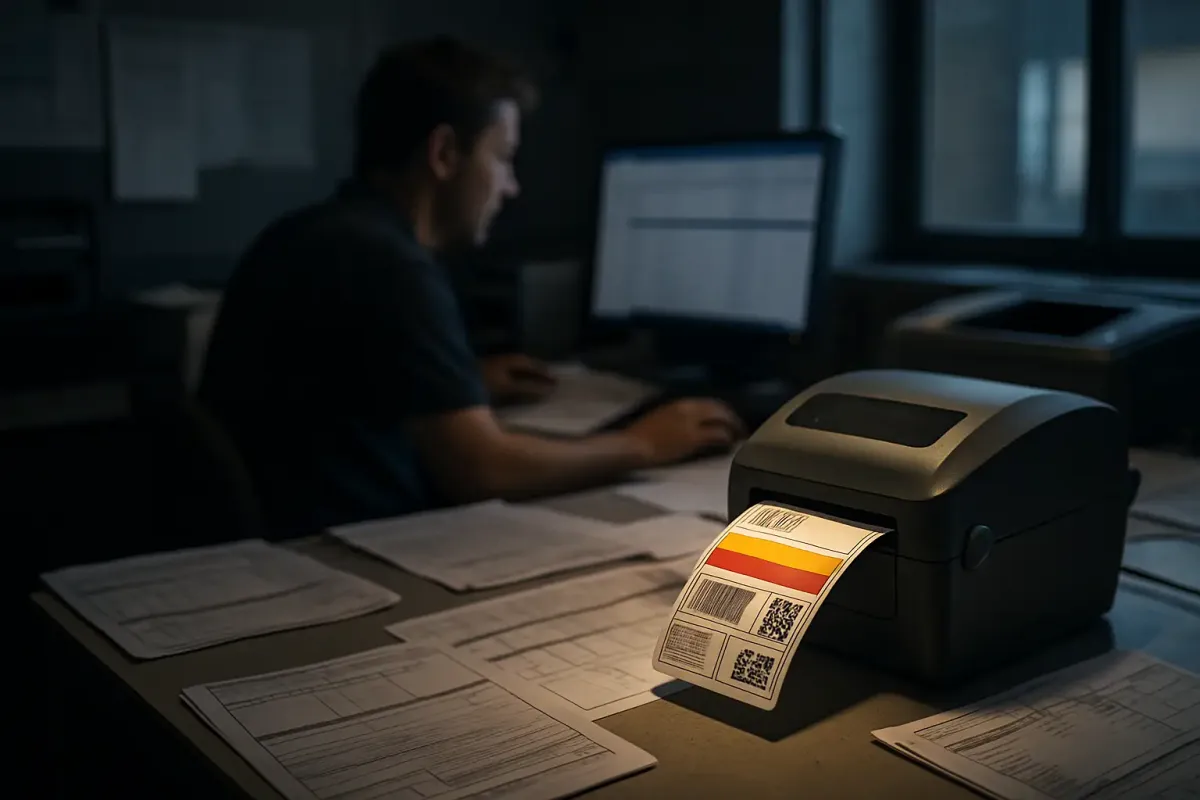
DHL has quietly rewritten a piece of shipping infrastructure that most integrators treat as decoration: the sustainability logo baked into every parcel label. According to the DHL API Developer Portal changelog for Post & Parcel Germany, the specifications and the Common Label Specification have been updated, as the GoGreen service will be discontinued as of August 31, 2026, and the previous GoGreen Plus logo will be replaced by a new claim. This isn't a marketing refresh. It's a documented change to the DHL Parcel DE Shipping API label spec, and it touches every system that renders a DHL shipping label in Germany.
Trade press picked up the same detail independently. Coverage aimed at online retailers confirms DHL beendet GoGreen zum 31. August 2026, with new EU rules against greenwashing driving the change, and GoGreen Plus becoming the standard. If you run a DHL GoGreen Plus API integration today, or you've hardcoded the old GoGreen asset into a PDF label template, this is the week to start your audit, not the week before the deadline.
Why now: Germany's UWG amendment leaves no room to wait
DHL isn't retiring GoGreen because it wants to. The German Bundestag and Bundesrat have adopted legislation amending the Act Against Unfair Competition, implementing the EU Directive Empowering Consumers for the Green Transition, with the new rules entering into force on September 27, 2026. That directive is what forces the timeline, and DHL says so directly in its own changelog notes.
The part that should worry anyone managing checkout copy or label templates is the absence of a grace period. Per the legal analysis from Gibson Dunn, the new rules will apply as of September 27, 2026, with no transition period. Companies must ensure that all products and marketing materials comply with the new requirements by that date, including products that have been produced at an earlier date and have not been sold yet, as well as packaging and marketing materials printed at an earlier date. Materials already in a warehouse count. So do labels already coded into a rendering pipeline.
Enforcement isn't theoretical either. Gibson Dunn notes that widespread infringements with an EU dimension may attract regulatory fines of up to 4% of annual turnover, and misleading advertisements are punishable by fine or imprisonment of up to two years. That's a UWG greenwashing exposure figure worth putting in front of legal before you decide the label change is "just DHL's problem."
What actually changes in the API and label spec
At the label level, the fix is mechanical but not optional. DHL's own guidance for customers states plainly that the GoGreen logo requires removal by August 31, 2026, at the latest, and that removal is now written into the Common Label Specification itself, not just marketing style guides.
At DHL Express, the change surfaces differently, at the account-contract level rather than as a simple flag in the request body. The MyDHL API changelog documents consideration of special services (CIN2, GoGreen/GoGreen+), which is part of the customer agreement on DHL Express account level, when rendering the transport label. Translation: if your MyDHL API integration renders a label with the old GoGreen branding, the fix may sit in your DHL account configuration, not in your codebase. Confirm which service level is active before you assume a code deploy fixes it.
| Date | What happens |
|---|---|
| August 31, 2026 | GoGreen service discontinued; GoGreen logo must be removed from labels and the Common Label Specification |
| September 27, 2026 | Amended UWG enters into force; offsetting-based "climate neutral" claims banned EU-wide with no transition period |
What to audit before both deadlines hit
Treat this as a two-track project, one technical and one legal, running on the same calendar.
- Pull every label template, PDF renderer and CLS reference in your DHL Parcel DE Shipping integration that still calls the GoGreen logo asset, and confirm the removal path with your DHL account manager or the software vendor maintaining the template.
- If you integrate DHL Express via the MyDHL API, ask your account team which special service level (GoGreen or GoGreen Plus) is contractually active, since that setting drives label rendering independent of your request payload.
- Audit checkout pages, order-confirmation emails and product pages for "climate neutral" or "CO2 offset" language tied to DHL shipping. Under the amended UWG, offsetting-based claims lose their legal footing regardless of who wrote the copy.
- Re-test label output in the DHL sandbox once the new claim replaces the old logo, rather than assuming a cosmetic swap won't break a fixed-position label template.
- Extend the review beyond DHL. The underlying EmpCo Directive applies EU-wide to any consumer-facing environmental claim, so checkout copy referencing other carriers' offset programs carries the same September 27 exposure.
The pattern: sustainability claims are now an API and contract problem
This is what carrier connectivity looks like when compliance law reaches into the label layer. It's not just OAuth migrations and REST rewrites anymore, regulatory-driven logic is now embedded in account-level flags and label specs that shippers have to track carrier by carrier. Shippers running DHL, GLS, DPD and others through direct, self-maintained connections carry that audit burden alone, one carrier changelog at a time. Multi-carrier platforms such as nShift, ShippyPro, Sendcloud and Cargoson exist precisely to absorb this kind of carrier-side label and compliance change centrally, so an update like GoGreen's retirement gets patched once rather than in every warehouse's template file.
Whether you outsource this or handle it in-house, the calendar doesn't move. Start with the label templates, confirm your DHL Express account service level, and get legal to sign off on your checkout copy before September 27, 2026. Expect other carriers operating in Germany to publish similar spec changes as that date approaches.