David Chen

Stuttgart
Former IT director at a major European retailer, David built carrier integrations for 200+ transport partners. Now consults on API migrations and EDI modernization.
Webhook Authentication Cascade Failures in Carrier Integrations: Why 72% Fail After Sandbox Success and How European Shippers Can Build Production-Ready Authentication Systems in 2025

Webhook Authentication Cascade Failures in Carrier Integrations: Why 72% Fail After Sandbox Success and How European Shippers Can Build Production-Ready Authentication Systems in 2025

PostNord webhook re-registration becomes a production nightmare when authentication credentials expire every 90 days. Three failure modes only surface in production: network timeout cascades (where one slow webhook endpoint causes others to timeout), rate limiting interference (webhooks competing with API calls for the same rate limit pool), and authentication token
David Chen
Carrier API Rate Limiting Solutions: How European Shippers Can Prevent Integration Throttling During Peak Seasons Without Breaking TMS Performance in 2025

Carrier API Rate Limiting Solutions: How European Shippers Can Prevent Integration Throttling During Peak Seasons Without Breaking TMS Performance in 2025

European shippers hit by carrier API rate limiting lose an average of €15,000 per month when throttling disrupts their shipping operations. Your label generation stops. Your tracking updates fail. Your customers start calling. Yet most companies only discover the extent of their rate limit exposure during peak season, when
David Chen
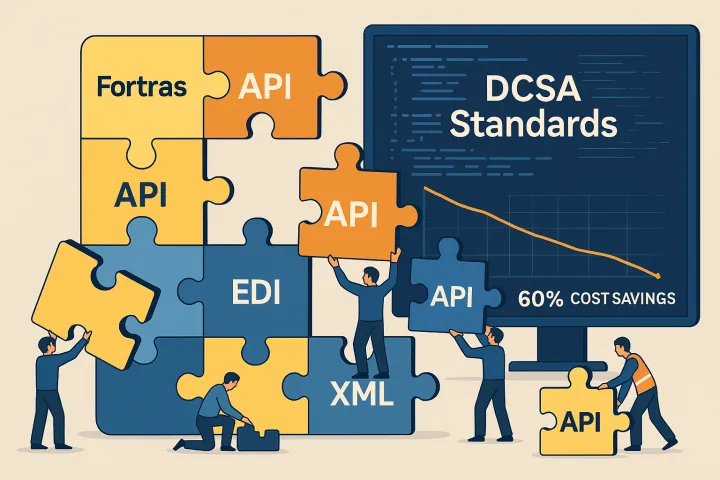
DCSA API Standards Revolution: How European Shippers Can Cut Carrier Integration Costs by 60% and Future-Proof TMS Connectivity in 2025

DCSA API Standards Revolution: How European Shippers Can Cut Carrier Integration Costs by 60% and Future-Proof TMS Connectivity in 2025

European shippers with transport budgets over €10 million are discovering what industry leaders already know: the ongoing transition to an API ecosystem for container shipping presents the biggest opportunity to reduce carrier integration costs since EDI standards emerged in the 1990s. These standardised data sets are designed to simplify cross-carrier
David Chen
Carrier API Health Monitoring: How European Shippers Can Build Early Warning Systems to Prevent €100,000+ Integration Failures in 2025

Carrier API Health Monitoring: How European Shippers Can Build Early Warning Systems to Prevent €100,000+ Integration Failures in 2025

DHL Express dropped its tracking API for 90 minutes during peak Black Friday traffic, leaving major European retailers unable to update customers about €43 million worth of shipments. The silent failure only triggered alerts when customer complaints flooded support desks. Sound familiar? Average weekly API downtime rose from 34 minutes
David Chen
Hybrid EDI/API Integration Strategy for European TMS: How to Modernize Carrier Connectivity Without Breaking Legacy Workflows or Budgets in 2025

Hybrid EDI/API Integration Strategy for European TMS: How to Modernize Carrier Connectivity Without Breaking Legacy Workflows or Budgets in 2025

Last month, a mid-sized German automotive parts manufacturer discovered six months into implementing their new TMS that their chosen platform couldn't handle their complex carrier network across 12 countries. They'd already spent €800,000 before realizing their supposedly modern solution required costly custom development for basic
David Chen
API Versioning Crisis Management: How European Shippers Can Bulletproof Carrier Integrations Against Deprecation Failures and Avoid €50,000 Emergency Rebuilds in 2025

API Versioning Crisis Management: How European Shippers Can Bulletproof Carrier Integrations Against Deprecation Failures and Avoid €50,000 Emergency Rebuilds in 2025

Last month, a major European manufacturer discovered their entire shipping operation was about to collapse. DHL had quietly deprecated their v2 Shipping API with just 30 days' notice, forcing their IT team into a €50,000 emergency rebuild while managing hundreds of daily shipments. Their API governance strategy consisted